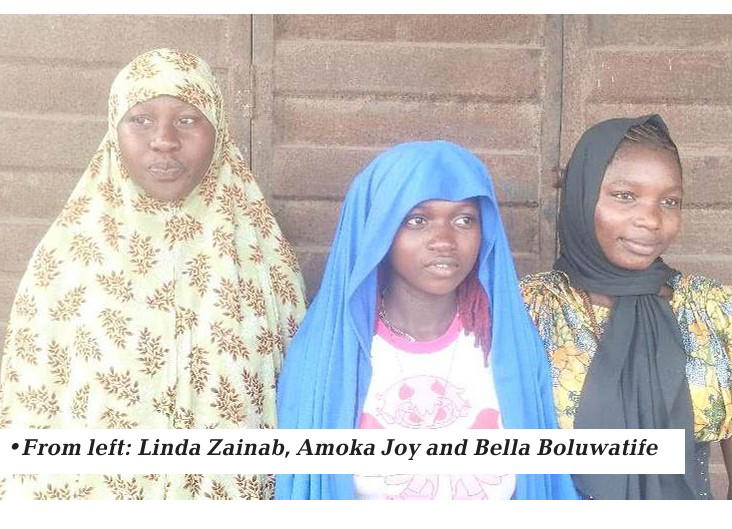
On February 17, 2026, Bella Boluwatife embarked on a journey with high hopes, only to find herself entangled in a web of deceit and exploitation. She, like many young Nigerian women, was lured by the promise of a better life in Malaysia, where she was told she would work as a bar attendant or housekeeper.
Her parents had asked the necessary questions, and the answers seemed reassuring, complete with pictures of a modern bar, which later turned out to be a ruse. Bella was not alone in this ordeal, as she travelled with two others, Linda Zainab, a young fashion designer, and Amoke Joy.
Bella recounted her experience, stating that an agent known as Peter Osas had arranged their trip, assuring them of legitimate jobs abroad, and even facilitating a video call with a woman named 'Angel', who sponsored their trip. Before the call, they were coached to respond affirmatively to every question, unaware that this was the first step in their manipulation.
From Ogun State, the trio was driven to the Seme border and then on to Cotonou, Benin Republic, where their clothes were changed, and new identities were issued, complete with passports processed in under an hour. They were instructed to conceal their origin if questioned, further entangling them in the web of deception.
Bella explained that they were then transported to Mali, a journey that took six days, involved multiple checkpoints, and required them to navigate through armed officers and unanswerable questions, all while being treated as cargo rather than travellers.
Upon arrival, the harsh reality set in: there were no proper houses, only huts made of tarpaulin, and the environment was reminiscent of a brothel, complete with dozens of condoms and girls as young as 13 dressed provocatively. The truth hit hard, and the trio soon realized they had been duped into working in a brothel.
Bella recalled that their initial protests were met with resistance, and they were informed that each of them owed 1.5 million CFA francs, a debt they had to repay to gain freedom. Every aspect of their lives, including meals and movements, came with a cost, and when Bella fell ill, her hospital bill was added to her debt.
Zainab echoed Bella's experience, stating that they begged to be released from the work, but their pleas were met with cold responses, and their phones were seized. They were separated and assigned to different 'bosses', effectively cutting off their communication with the outside world.
Zainab remembered the ordeal vividly, recalling how they were forced to stand outside, crying and praying, but ultimately forced to succumb to their circumstances. The system, designed to break their resistance, used time as a weapon, and the trio was subjected to a never-ending stream of customers, with their handlers reaping the benefits.
However, Joy managed to contact her mother, who alerted the authorities, and their parents reached out to the NAPTIP Lagos Zonal Command, which subsequently contacted the Global Anti-Human Trafficking Organization (GAHTO) for urgent intervention. GAHTO sprang into action, and the Nigerian embassy in Mali was alerted, leading to increased pressure on their captors.
As the pressure mounted, their bosses grew uneasy, asking them to lie to their parents about their situation, but the trio refused. Eventually, their boss reluctantly allowed their return to Nigeria, albeit without apology or accountability, and they were given minimal money and placed on a bus back home.
Bella, Zainab, and Joy's story serves as a window into the growing trafficking network that exploits economic hardship, trust, and desperation, luring young women with promises of jobs abroad, only to trap them in cycles of debt bondage and sexual exploitation.
Prosper K. A. Michael, Founder of GAHTO, highlighted the calculated methods used by traffickers, including fake job offers, coached interviews, forged travel documents, isolation, and psychological and financial control. He noted that human trafficking is a major global crime against humanity, involving a well-organized network of recruiters, transporters, and exploiters who use force, fraud, and deception to lure victims.
The victims, now back in Nigeria, are focused on rebuilding their lives, with Bella hoping to return to her hairdressing, makeup, and wig-making career, while Zainab and Joy also strive to regain their footing. Their voices, once silenced, now serve as a warning, raising urgent questions about the fate of others who may still be trapped in similar situations.
Comments
Please login to leave a comment.
No comments yet. Be the first to share your thoughts!