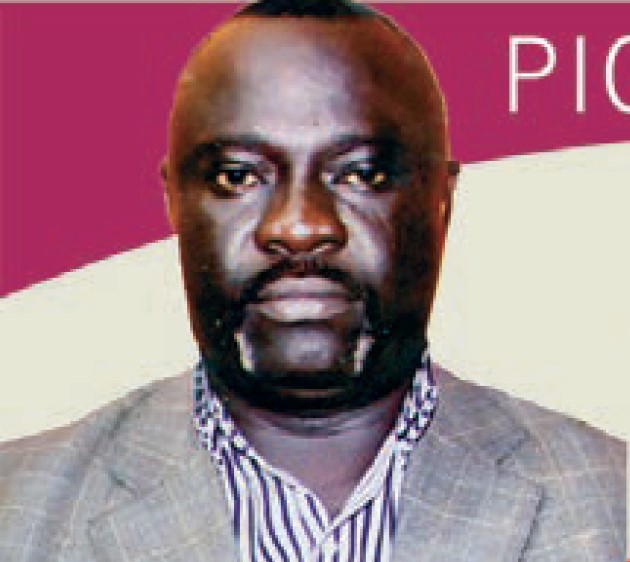
IT was actually very pathetic reading reports of apologies made by Power Minister, Adebayo Adelabu, earlier in the week. Reading his apology nearly made me puke; they were the words of a politician used to, and schooled in, dressing up inefficiencies in mandate actualisation with rhetoric.
For years, since I was a boy (that’s as far back I can remember), this country has struggled with electricity. My late father (Chief Adewale Adekoya, 1933-2017), like millions of others living or dead, hoped many times in his lifetime that the problem would be solved; it didn’t till he passed on. Adelabu’s words: “I want to apologise to Nigerians, officially now, coming from me as the Minister of Power, for this temporary issue that is leading to hardship being experienced, especially during this dry season, where there is so much heat everywhere,” he said. He then went on to remind us about what we all know, and are already suffering.
“Businesses are being affected, schools have been affected, and industries have been affected. It is not our wish to find ourselves in this situation, but it is due to some factors that are actually beyond our control.”
I don’t really know whether Nigerians have accepted Adelabu’s apologies, but on the internet, which some people now say is a witch because nothing publicly said is forgotten there, people are recalling promises made by President Bola Tinubu while campaigning for election. His words, then, were to the effect that if he didn’t provide electricity in his first term, he should not be voted in for a second term. But that is politics.
What is clear since 2023 when this administration assumed office is that a clear understanding of the power sector issues, from which solutions can be generated, is lacking. There is a stubborn attachment to generated power while options for embedded power are not fully exploited. The solar power option has not, in my estimation, been fully explored, beyond getting Aso Rock out of the national power grid. All the institutions that were supposed to benefit from the presidential solar power initiative are still on the national grid, which collapses with a frequency that will make the fabled ogbanje child blush in shame. Adelabu also spoke of the generation target by end of 2026. Let me quote him: “Power generation will improve, transmission will improve, distribution will improve, and that 6,000 megawatts will be achieved before the end of this year, and Nigerians will be better for it.”
Joker. For long, at least for as long as I can remember, 6,000 mega watts has remained the generation benchmark. On that 6,000 mega watts, and the revenue from it, no less than eleven DISCOs, the Nigerian Systems Operator, the Nigerian Bulk Electricity Trading Company, NIBET; Nigerian Electricity Regulatory Commission and the 23 GENCOs (generating companies), including the Transmission Company of Nigeria depend for their livelihood, in addition to the power needs of some 200 million Nigerians.
Adelabu’s assertion that Nigerians will be better off with the achievement of 6,000 mega watts is laughable, and betrays a wholesome geo-historic misunderstanding of where Nigeria should be. The president has been speaking of a $1 trillion dollar economy. How can that happen with 6,000 megawatts? Is there any ambition by government people to really take this country out of the woods? China is the world’s largest producer of electricity, with 8,534 terra watts from various sources.
It overtook the United States in 2011 after rapid growth since the early 1990s. One terra watt, by the way is 1,000,000 mega watts. Maybe I’ve gone too far. South Africa, here on the same continent, generates 234,514,980 mega watts of electricity., and that is about 30 per cent of all electricity generated in Africa. Egypt and South Africa, just two countries, generate about 50 per ent of all electricity generated in Africa.
I have recalled this because of our saying that on the dance floor, if you don’t know how to dance, just imitate the steps of the dancer next to you. In terms of electricity, who is Nigeria copying? Who is our model? A poor generation base of just 6,000 megawatts, which is yet to be achieved, cannot and WILL NOT take Nigeria anywhere, and nowhere near a $1 trillion dollar economy. Adelabu’s words in his apologia exposes deep poverty of understanding of the role of power in the development of an economy like our own, and how power sufficiency can transform the lives of our peoples.
As is widely known, innovation always out paces regulation. Individual Nigerians are leaving their government behind, and in terms of electricity, they are furiously exploring the solar option, just like everybody is drilling boreholes for infallible water supply as water corporations nationwide continue to fail the people. While Tinubu and Adelabu are struggling with 6,000 mega watts, I beg them to get the Minister of Finance to reduce tariffs on imported solar power components. Or even abolish tariffs for them totally. This will enable us to power our lives and businesses more easily. Then Adelabu with his power banks and Tinubu can continue struggling with their 6,000 mega watts. TGIF.
Comments
Please login to leave a comment.
No comments yet. Be the first to share your thoughts!