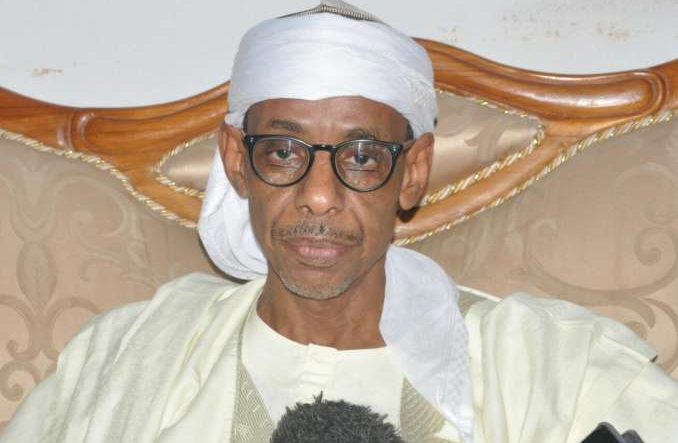
African wisdom cautions that a vendor of eggs should avoid sparking conflict in the marketplace, a proverb that resonates with the current rumors surrounding Bauchi State Governor, Senator Bala Mohammed, who is allegedly planning to defect from the Peoples Democratic Party, PDP, to the All Progressives Congress, APC.
If Governor Mohammed makes the switch, he will leave Oyo State Governor, Seyi Makinde, as the sole remaining PDP governor, prompting speculation about how long Governor Makinde will resist the temptation to follow suit and which party he might join next.
The adage "there is safety in numbers" may ultimately persuade Governor Makinde to join the APC, where he will likely encounter many familiar faces, including former colleagues who have already made the transition.
The APC's ranks continue to swell, with at least half of its current elected members having defected from the PDP, a phenomenon that has resulted in the APC boasting 32 State Governors and a near-total membership of all elected officials at all three levels of the federal system.
This unprecedented scenario has left scholars of democratic systems scrambling to find words to describe it, as it challenges traditional notions of single-party democracy and established conceptual frameworks.
President Bola Tinubu will likely go down in Nigerian history as the leader who successfully built his political base primarily through loyalty to his person and the remnants of the opposition party.
However, it is essential to note that the PDP is not yet a lost cause, as there are still many loyal supporters and a cluster of distinguished politicians and former office holders who insist that the party can be revived.
A segment of these loyalists, comprising experienced and knowledgeable individuals, believes that the judicial process will ultimately restore the PDP to its former glory, allowing them to breathe new life into the party within a few months and make a significant impact on the APC.
These individuals have faith in the independence of the judiciary, particularly regarding political party matters, and plan to pursue the appeal process to the Supreme Court, where they hope to achieve a favorable outcome.
If they succeed, they will have a foundation to build upon, but if they fail, they will lament the time lost and hope for a miraculous turnaround, potentially exploring options to register with other parties.
Meanwhile, another faction, led by Wike, has already defected to the APC, presenting a gift to President Tinubu, although this group may also reconsider their decision if they find the PDP to be a viable option for symbolic purposes.
A separate cluster of PDP members is working to rebuild bridges, hoping to reconcile and heal the party's wounds, either independently or through an alliance with other parties, a task that will require careful navigation, especially for those with vulnerabilities to ambush by anti-corruption agencies and the judiciary.
These individuals will find relative safety in the APC but will be deemed worthless in a party that views them as late-arriving refugees, highlighting the complexities of their situation.
The eventual demise of the PDP will mark the end of a distinguished era, one that was built on sound vision but ultimately succumbed to the incurable virus of an all-powerful leader, a party that was created in the late 1990s to facilitate the military's withdrawal from politics.
The PDP was founded by a Northern political elite who demonstrated a keen understanding of the nation's needs and forged strong links with politics and society, enjoying substantial national elite consensus and strong enough to overcome parochial interests.
Obasanjo, with his Northern endorsement, military background, strong character, and sound intellect, was an ideal candidate, and his control was threatened at the end of his first term, but he survived and subsequently strengthened his grip on the party.
During his first four years, Obasanjo successfully turned the entire South-West into friendly territory, except for one state: Tinubu's Lagos, which stood in defiant opposition, a period that would leave a lasting impression on both Obasanjo and Tinubu.
Tinubu survived due to his strong personal will and constant scheming, while Obasanjo met his match in terms of strength of will, and their eight-year tenure would be remembered for its intense political maneuvering.
Obasanjo's attempt to engineer a third term ultimately failed, and he instead recreated himself through the successful 'Yar'Adua/Jonathan ticket, leveraging the PDP's massive spread and depth, but Yar'Adua's and Jonathan's six years revealed the vulnerability of the PDP to weak leadership.
Complacency and corruption took hold, as the party prioritized greed over governance, and insecurity spread as the quality of leadership declined and vital state institutions weakened, creating an environment in which an opposition could thrive.
Under General Buhari, the opposition gained momentum, but the PDP failed to recognize the threat, and on several occasions, Nigerian citizens demanded clean and accountable leadership, only to be ignored.
Eventually, Buhari's persona and multitudes collaborated with Tinubu's instincts to defeat the PDP administration, aided significantly by PDP renegades, a fact that will be acknowledged in the history of the PDP as a substantial contribution to the APC's success.
Those who betrayed the PDP will be remembered as key players in the party's downfall, and their actions will be seen as a significant factor in the damage inflicted on the democratic system, where power belongs to the people.
Today, both the APC and the leading opposition party, the ADC, are essentially PDP in substance and philosophy, a testament to the party's legacy of defection, which has become an art form, one that could have been made illegal but was not.
The wheels have turned full circle, and the APC and ADC can learn a valuable lesson from the PDP: politicians alone do not guarantee popular support, and those who cannot be loyal to the parties that trust and mandate them will not be loyal to the citizen.


Comments
Please login to leave a comment.
No comments yet. Be the first to share your thoughts!