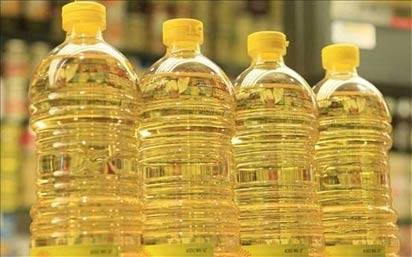
Vegetable oil
The vegetable and edible oil sub-sector, which is critical to the Federal Government’s food security programmes, is under severe strain from the unchecked influx of imported and smuggled products. Nigeria is naturally endowed with vast oil-palm belts across the South and expansive soya bean farms in the Middle Belt. We should not be dependent on imported vegetable oil. Yet, this is the paradox confronting Africa’s largest economy.
At a recent forum on “Balancing Food Affordability and Farmer Vulnerability: Nigeria’s Food Strategy and the Path to Sustainable Food Security,” held in Lagos, stakeholders spoke with one voice: local vegetable and edible oil producers are being squeezed out of the market by cheaper imported and smuggled brands. The consequence is a steady erosion of domestic production capacity.
The Vegetable and Edible Oil Producers Association of Nigeria, VEOPAN, has repeatedly raised concerns about the influx of imported and smuggled vegetable oils. Many of the smuggled products, which evade Customs duties and regulatory scrutiny, are sold at prices that local manufacturers simply cannot match. This is not competition, it is economic sabotage.
The impact is visible across the value chain. Processing plants that should operate at near full capacity now run far below their potentials. Farmers are discouraged from cultivating oil-bearing crops because depressed prices make production less attractive. The entire ecosystem becomes weakened as factory workers lose jobs. Investors are unwilling to commit fresh capital to expand existing capacity.
Aside these, government also suffers significant revenue leakages as smuggling deprives public coffers of billions of Naira in tariffs and duties; funds that could otherwise support agricultural reinvestment and economic diversification. At a time when government seeks to shore up revenues and reduce reliance on oil earnings, such leakages are indefensible. There is also a public health dimension as smuggled products often escape quality checks, raising concerns about adulteration and unsafe processing.
The National Agency for Food and Drug Administration and Control, NAFDAC, has on several occasions warned about unregistered and substandard edible oil brands in circulation. Cheap oils may save a few Naira in the short term, but the long-term health implications could be far more costly. Nigeria’s edible oil industry should be a pillar of rural industrialisation and food security. Instead, it is struggling to survive in a market distorted by illicit supply and weak enforcement.
This contradiction undermines the very agricultural transformation agenda the government seeks to promote. Government must safeguard industries that create jobs, add local value and strengthen food security. Protecting domestic production is in our national economic interest.
The local industry must be supported. We strongly believe that once the enabling environment, such as security and appropriate incentives are provided, there will be healthy competition. This will in turn drive down prices, thus making our local products increasingly more competitive internationally.



Comments
Please login to leave a comment.
No comments yet. Be the first to share your thoughts!