By Nkiruka Nnorom
Against the backdrop of the energy crisis emanating from the ongoing Middle East war, experts in the energy sector have called for a shift towards joint renewable energy investment and cross-border infrastructure between South Africa and Nigeria to safeguard the continent’s energy future.
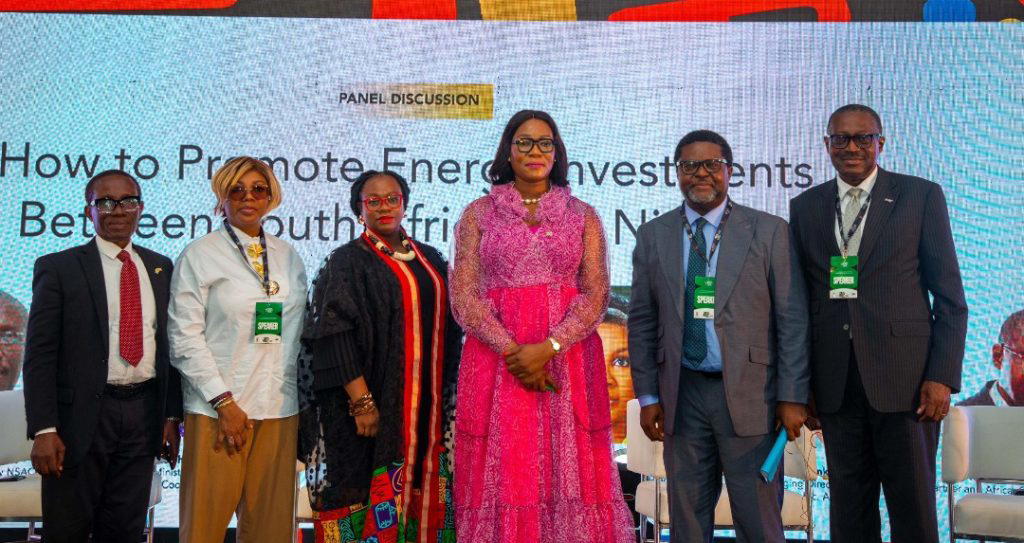
Leading the call at the 4th South Africa Week, themed: Repositioning and Promoting Energy Investment Between South Africa and Nigeria”, in Lagos, Ms. Thandi Moraka, South Africa’s Deputy Minister of International Relations and Cooperation, described both nations as powerhouses in the African continent, each with its immense potential to drive sustainable development, economic growth and regional integration through strategic energy collaboration.
She urged both countries to leverage their complimentary strength, including Nigeria’s solar potential and oil\has reserves as well as South Africa’s wind and solar capacity to build cross-border energy infrastructure, create a resilient continental energy market and export surplus energy.
“We are all aware that the energy is the backbone of every development, we need to look at the reliable and the affordable and most importantly sustainable energy access that can help us to unlock opportunities across industries and also goes to a point of empowering communities and enhance a good quality of life for our citizens,” she said.
“The process of repositioning our energy investments requires a strategic shift, one that is emphasised around issues of regional economic integration and innovation capabilities of our beautiful countries.
“We need to both work towards possessing abundant renewable sources with Nigeria with its solar potential and South Africa with its wind and solar capabilities that can be harnessed to diversify energy resources,” she added.
Moraka called for energy diplomacy anchored in the African Union agenda using the African Continental Free Trade Area (AfCFTA) to harmonise regulations, reduce trade barriers, and establish regional trade corridors for equipment, technology and expertise.
She highlighted Dangote Refinery Plc as a proof of Africa’s capacity to boost energy security and cut import dependence and urged industry players to be innovative, scale similar projects and use routes like the Cape of Good Hope to supply the SADC region.
Acting Consul-General of South Africa in Nigeria, Ms. Kgothatso Xulu, described the roundtable as a platform “to exchange insights, strengthen networks, and explore practical pathways” to reposition and promote energy investment, address regulatory uncertainty, and unlock opportunities in both nations’ energy markets.
She called for deeper continental collaboration in oil and gas, renewable energy, and electricity, alongside high-quality infrastructure development and skills transfer to drive regional development and reaffirmed South Africa’s commitment to placing Africa at the centre of its foreign policy.
Mr Segun Adebutu, Chairperson, Petrolex, noted that both nations are leading economies and key drivers of Africa’s energy and resource landscape, facing growing demand, shifting regulations, and pressure for reliable, sustainable energy.
From an industry lens across oil, gas, and mining, he said the opportunity was significant, but unlocking it at scale requires deliberate focus on three crystal areas, including clarity and consistency in the investment environment, enabling commercially viable participation and a “sharp focus on execution.”
Arguing that there’s no shortage of licences or strategic intent, he said that the real challenge is moving projects efficiently from concept to production, which demands coordination, discipline, and delivery.
Eng. Chichi Emenike, Managing Director, Neconde Energy Limited, said that while a symbiotic relationship already exists, there’s a “compelling narrative” to signal both nations as a force for Africa’s energy and economic growth.
Against the backdrop of Middle East crises and global energy disruptions, she said Africa sits at an intersection of both opportunities and vulnerability with surging costs threatening macroeconomic stability.
Citing IMF projections, she noted that Africa’s combined output would hit about $3.32 trillion in 2026, with South Africa leading as the largest economy at $443.64 billion and Nigeria third at $334 billion.
However, she said both face energy shortages, policy uncertainty, and lower energy consumption per capita that rattle investors.
Emenike outlined three repositioning imperatives, including accelerating Africa’s reduction of dependencies on other nations due to huge risk, curbing over-dependency on foreign aid that threatens sovereignty and achieving policy and regulatory alignment, and avoiding policy flip-flop that frightens investors.
Highlighting opportunities that exist for trade partnership between both countries, Mr. Calvin Phume, Director, Africa Bilateral Economic Relations, Department of Trade, Industry and Competition South Africa, said that over 60 S’African companies have invested an estimated $7.80 billion in Nigeria, creating 11,537 jobs between 2003 and March 2026.
He emphasized the need for both countries to increase efforts to encourage and support value-added exports under the AfCFTA and maximise the new market access under AfCFTA preference to drive trade.
Comments
Please login to leave a comment.
No comments yet. Be the first to share your thoughts!