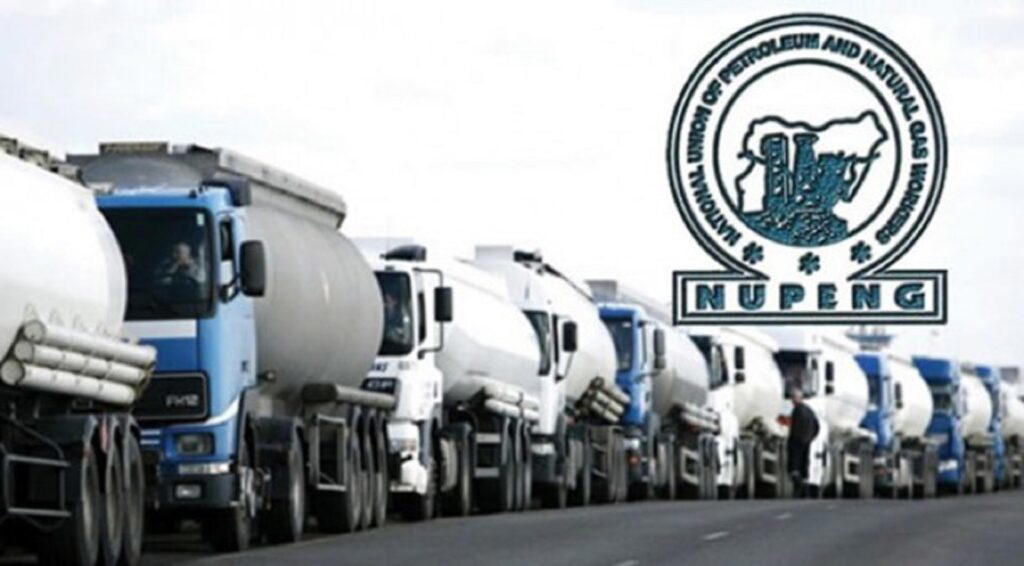
The Nigeria Union of Petroleum and Natural Gas Workers, NUPENG, has expressed deep concerns over the rising trend of job losses and the erosion of workers' rights in the oil and gas industry, according to NUPENG President, Prince Williams Akporeha.
In his valedictory speech at the union's 6th Quadrennial Delegates Conference in Lagos, Akporeha warned that the informal sector is bearing the brunt of economic hardship as industry reforms take shape, with many workers facing significant challenges.
Akporeha cited the removal of fuel subsidy as a major factor, stating that it has had a profound impact on workers, particularly in the informal sector, who have lost their livelihoods as a result, and emphasized that reforms such as the promotion of gas as a transition fuel must be balanced with the need to protect workers' interests.
He stressed the importance of a just and fair transition, urging the government to provide training and funding for workers to enable them to adapt to the changing landscape of the industry, and called for a more inclusive approach to policy-making that takes into account the needs and concerns of workers.
Akporeha expressed disappointment that the union was not adequately consulted in the planning process, warning that this exclusion could exacerbate tensions within the industry and create further challenges for workers, and alleged that there are growing instances of unfair labor practices, including attempts to undermine union membership among workers.
He noted that drivers are being recruited under restrictive conditions that prohibit them from joining unions, which is a clear violation of the Constitution, the Labour Act, and international labor standards, and emphasized that NUPENG will pursue all available legal avenues to protect the rights of workers to union representation and collective bargaining.
The NUPENG President also highlighted the growing insecurity and economic strain affecting members across the country, citing the rising incidence of petroleum truck hijacking and kidnapping, and the significant costs that workers are incurring to secure their businesses.
Akporeha further emphasized the challenges posed by deteriorating road conditions, which are making it difficult for workers to distribute petroleum products, and noted that many major economic roads remain in a state of disrepair, exacerbating the difficulties faced by workers.
Despite these challenges, Akporeha highlighted the achievements of his administration, including improved welfare packages, the expansion of union branches, and infrastructure development, and reflected on his tenure, saying "I came, I saw, and together we conquered, not for personal glory, but for the dignity of every man and woman who powers this nation."
With a strong call to action, Akporeha declared that justice and power must always rest with the working class, and that protecting jobs and upholding workers' rights must remain central to all reforms in the oil and gas sector, emphasizing the need for government and industry stakeholders to prioritize these concerns.
Comments
Please login to leave a comment.
No comments yet. Be the first to share your thoughts!