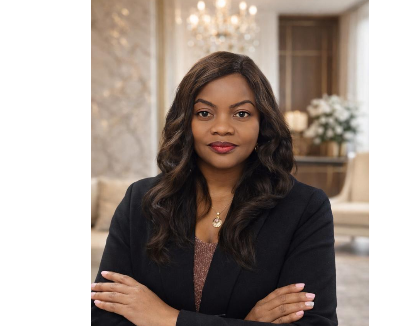
Nigeria's thriving events industry is home to a plethora of creative talent, yet it struggles with fragile business foundations, leaving many professionals to face burnout, financial instability, and limited growth, according to Theresa Aisha Mebitaghan, a renowned architect and business strategist.
Mebitaghan, also known as Tessie, identifies the primary challenge plaguing the industry as the lack of robust business systems, rather than a shortage of creativity or skill, which can sustain long-term growth and development.
She notes that numerous event professionals operate for extended periods without well-defined pricing models, operational frameworks, or scalable systems, which often erodes profitability and professional stability, a situation that undermines the industry's potential.
According to Mebitaghan, "This is one of the few industries where people operate for years without a proper pricing model or execution system," highlighting the need for structural change, as she emphasizes, "We don’t need more talent; we need structure."
Mebitaghan, who holds dual master's degrees in Architecture and Construction Project Management, founded BeeZees Creations in the United Kingdom in 2010, which has since evolved into The BeeZees Group, a multifaceted enterprise with a presence in the UK and Nigeria.
With her architectural background, where meticulous planning and precision are crucial, Mebitaghan has focused on introducing similar discipline to Nigeria's creative events sector, recognizing that many talented professionals fail to build sustainable businesses due to their reliance on individual effort rather than structured systems.
She explains that "Talented creatives deliver extraordinary events, but the business side is often weak," with operations being personality-driven, pricing being reactive, and growth becoming difficult without scalable systems, ultimately leading to a cycle of financial struggle despite expertise.
As a consequence, Mebitaghan observes that "Talented people remain broke, burnout becomes widespread, and the cycle continues," highlighting the need for a more structured approach to business in the industry.
To address this challenge, Mebitaghan established the BeeZees Training Academy, which offers Continuing Professional Development (CPD)-certified programs designed to equip creative entrepreneurs with essential business skills often absent from artistic training.
One of the academy's flagship programs, The Elevated Event Planner & Stylist Masterclass, provides practical guidance on pricing strategies, operational systems, and brand positioning aimed at helping professionals attract high-value clients and build sustainable enterprises.
Mebitaghan emphasizes that "The future of this industry is not about who can design the most beautiful space," but rather "it is about who can build a business that operates efficiently, grows consistently, and generates sustainable income."
Beyond the events industry, Mebitaghan's initiatives extend to youth development and institutional collaboration, with projects such as the BeeZees Young Creatives Project in the United Kingdom, which offers structured creative development pathways for sixth-form students.
In Nigeria, she has worked with organizations on digital governance and artificial intelligence-driven public sector training programs, demonstrating her commitment to driving growth and development in the country's creative economy.
Mebitaghan's renewed focus on Nigeria is driven by the rapid expansion of the country's creative economy and the need to ensure that talent is matched with sustainable business structures, as she notes, "Nigeria's creative space is growing quickly, but growth without structure leaves many professionals behind."
She emphasizes that "I’m not coming to celebrate the growth alone; I’m coming to address what the growth is leaving behind," highlighting her dedication to creating a more sustainable and equitable industry.
Industry observers note that Nigeria's events sector moves billions of naira annually and continues to expand alongside the country's entertainment and hospitality industries, underscoring the need for strengthened pricing systems, operational structures, and professional discipline to ensure long-term sustainability.
For Mebitaghan, the message is clear: while creativity may open doors in the events industry, only strong systems and business structure can keep them open, ensuring the long-term success and growth of professionals in the sector.


Comments
Please login to leave a comment.
No comments yet. Be the first to share your thoughts!