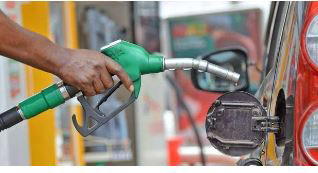
Nigeria's daily consumption of petrol, also known as Premium Motor Spirit (PMS), has decreased to 56.9 million litres per day in February 2026, marking a drop from 60.2 million litres per day in January, according to the Nigerian Midstream and Downstream Petroleum Regulatory Authority (NMDPRA).
The NMDPRA revealed this information in its recently released factsheet, which highlights a significant shift in the country's conventional supply pattern, where local refineries typically account for less than 20 per cent of petrol supply.
The increasing influence of the Dangote Refinery in the domestic market is attributed to its large-scale refining capacity, which is gradually changing supply dynamics, as noted by the authority.
Petrol imports have also seen a substantial decline, decreasing by approximately 25.4 million litres per day due to reduced importation, as indicated by the agency.
Following an examination by Vanguard, it was found that the rise in domestic supply has strengthened the nation's fuel security, with the agency reporting that the country maintained about 31 days of petrol sufficiency stock in February 2026.
Jeremiah Olajide, the Chief Executive Officer of Petroleumprice.ng, stated in an interview with Vanguard that the inclusion of Dangote's inventory in national supply calculations underscores the refinery's growing role as a strategic buffer for Nigeria's downstream petroleum sector.
Olajide further noted that the emergence of large-scale domestic refining is gradually reshaping Nigeria's fuel supply chain, reducing dependence on imports and improving the country's ability to maintain stable petrol availability, a significant shift from the past when Nigeria relied almost entirely on imported petrol.
The Dangote Petroleum Refinery has announced a major reduction in the prices of petrol and Automotive Gas Oil (AGO), also known as diesel, with the aim of easing the financial burden on consumers and supporting broader economic stability across Nigeria.
The refinery's new pricing framework includes a reduction in the gantry price of PMS from ₦1,175 to ₦1,075 per litre, representing a ₦100 reduction, as well as a decrease in the coastal price from ₦1,150 to ₦1,028 per litre, representing a ₦122 decrease.
Diesel prices have also been reduced from ₦1,620 to ₦1,430 per litre, amounting to a ₦190 reduction, as part of the refinery's efforts to maintain a pricing structure that is sensitive to global market trends and aligned with its principles of fairness and transparency.
The refinery purchases crude at the global benchmark price plus a premium of $3 to $6, and foreign exchange payments are made at the prevailing market rate, with no subsidies applied to either crude or foreign exchange, as stated by the company.
Additionally, crude supplied under the Naira-for-Crude arrangement is priced in line with the global benchmark plus premium and converted to naira using the current exchange rate, according to the refinery.
In 2025, the refinery reduced its gantry prices on no fewer than eight occasions, increasing them only twice, a move described as rooted in economic patriotism and its responsibility to Nigerians, with the refinery committed to passing on any cost advantages to consumers across the 36 states and the Federal Capital Territory.


Comments
Please login to leave a comment.
No comments yet. Be the first to share your thoughts!