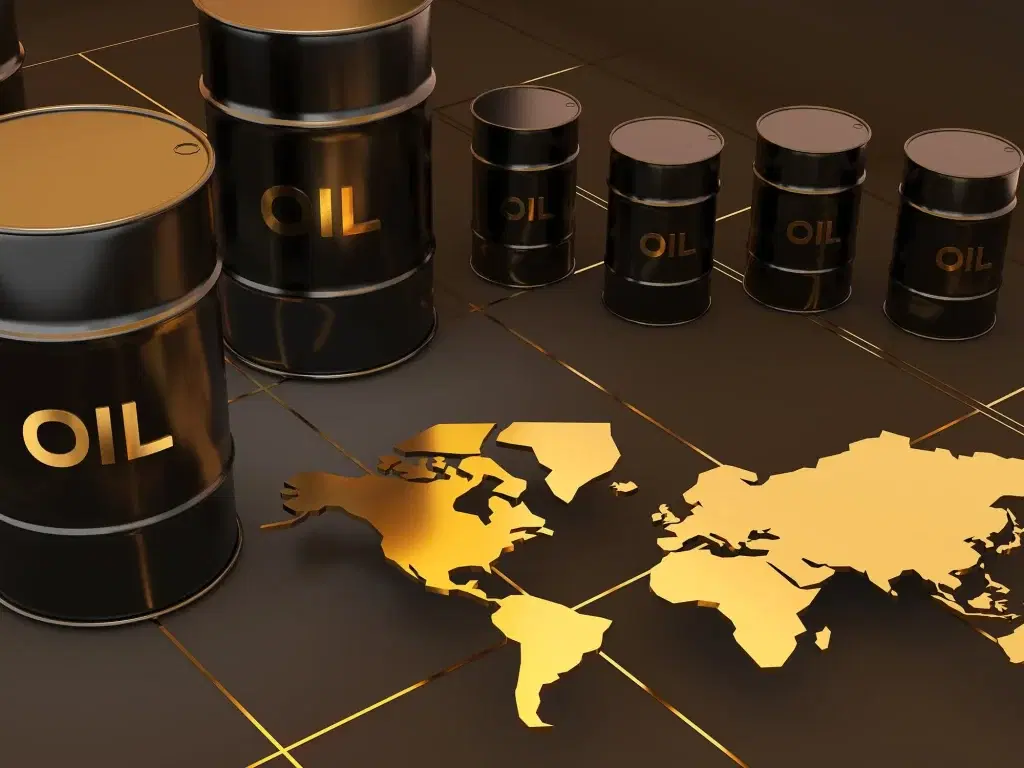
Nigerians may face continued high prices for Premium Motor Spirit, also known as petrol, and Automotive Gas Oil, also known as diesel, as the price of crude oil rose above $100 per barrel.
This development comes after a brief drop in crude oil prices to $92 per barrel on Wednesday, which had raised hopes of lower fuel costs for Nigerians.
However, the escalation of the war between the United States and Israel, and Iran's insistence on keeping the Straits of Hormuz closed, led to a surge in crude oil prices.
Despite announcements by Dangote Petroleum Refinery and Nigerian National Petroleum Company, NNPC, Limited, of petrol price reductions on Tuesday and Wednesday, the rise in crude oil prices may undermine these efforts.
The International Energy Agency, IEA, had reported that its 32-member countries would release 400 million barrels of oil from their reserves to cushion the effect of the Straits of Hormuz closure, causing oil prices to drop to $88 per barrel on Wednesday.
However, following Ayatollah Mojtaba Khamenei's defiant posture and threat to sustain the blockage, prices began to rise again, with crude oil prices increasing to between $96 to $117 per barrel, depending on the grade.
As of yesterday, petrol prices remained high, at N1,200 per litre and above, across the country, with depot owners and marketers maintaining prices of N1,200 and N1,300 per litre.
In Lagos, depot owners such as Matrix, Menj, NIPCO, Pinnacle, and Rainoil sold petrol at N1,200, N1,180, N1,175, and N1,200 per litre, respectively.
In Warri, depot owners like Danmarna, Matrix, Parker, Prudent, and Zamson sold petrol at N1,200, N1,205, N1,200, N1,204, and N1,200 per litre, respectively.
In Port Harcourt, Bulk Strategic, Liquid Bulk, Masters, Matrix, and Sigmund sold petrol at N1,200, N1,150, N1,215, N1,220, and N1,215 per litre, respectively.
In Calabar, depot owners such as Dozzy, Fynefield, Matrix, NorthWest, and Wabeco sold petrol at N1,195, N1,200, N1,205, N1,200, and N1,195 per litre, respectively.
Transporters and commuters have lamented the high fuel prices, calling on the Nigerian Midstream and Downstream Petroleum Regulatory Authority, NMDPRA, to intervene and compel oil marketers to adjust pump prices without delay.
One commuter, who wished to remain anonymous, noted that depot owners are quick to adjust prices upwards but slow to adjust them downwards in favour of consumers.
Despite the rise in crude oil prices, NNPC Limited has reduced the pump price of petrol at its retail outlets to N1,130 per litre in Lagos and N1,165 per litre in Abuja, effective Wednesday.
The reduction represents a drop of N100 from the previous price of N1,230 per litre in Lagos and N95 from N1,260 per litre in Abuja.
Prof. Wumi Iledare, a Petroleum Economist, has described the current situation in Nigeria as a market undergoing structural transition, with pricing behaviour influenced by expectations about future replacement costs.
Iledare noted that the key issue is market stability, rather than short-term price movements, and that Nigeria needs to deepen domestic refining, ensure reliable crude supply to local refineries, and maintain a transparent and predictable pricing framework.
Ayatollah Mojtaba Khamenei, Iran's new Supreme Leader, has said that the Straits of Hormuz will remain closed, and that his country will continue to target US bases in neighbouring countries if they are not shut down.
Khamenei also thanked Iran's allies and proxies in the region, which he called the "Resistance Front," and urged them to continue fighting.
The International Energy Agency, IEA, has warned that the war between the US, Israel, and Iran is creating the largest supply disruption in the history of the global oil market.
Retaliatory missiles and drone attacks have brought shipping through the Straits of Hormuz almost to a halt, with energy infrastructure across the region being targeted.
Markets are also being rattled by the risk of prolonged conflict, with US President Donald Trump saying the war could end soon, but Iran warning that it could wage a long conflict that would destroy the world economy.
The IEA has agreed to release 400 million barrels of oil from its member countries' reserves, but analysts have said that this move is too small to offset the disruption triggered by the American-Israeli attacks on Iran.
Nigeria's oil output, excluding condensate, dropped to 1.314 million barrels per day in February 2026, according to the Organisation of Petroleum Exporting Countries, OPEC.
An expert has noted that the Federal Government is likely to generate additional revenue based on the current high price and limited volumes exported to the global market, but Nigerians will suffer as they continue to pay high prices for petrol and other petroleum products.
Six vessels have been attacked amid reports of Iranian drone boats and sea mines, with explosive-laden Iranian boats attacking two fuel tankers in Iraqi waters, setting them ablaze and killing one crew member.
Nigeria has been advised to leverage global oil price hikes by boosting production and securing pipelines, while saving windfall revenues in fiscal buffers and shielding citizens from inflation through enhanced refining and targeted social protection.
Long-term stability requires diversifying the economy beyond oil to reduce vulnerability to external geopolitical shocks, according to Rotn. Adeleke Olubanwo, Publisher.
Former CRAN President, Odita Sunday, has urged the Federal Government to proactively cushion shocks from the U.S.–Israel–Iran conflict, which has led to volatile oil prices and inflation.
Editor-in-Chief, Ifueko Oviasu, has called on the government to urgently address the soaring prices of food, essential commodities, and petroleum products, and to implement subsidies and strict regulations to checkmate arbitrary costs.
Entrepreneur, Erhahi Emmanuel, has advised the government to prioritize energy independence, foreign reserves, and local modular refineries, while mandating an 80% reduction in imports and returning subsidies to ensure stability.


Comments
Please login to leave a comment.
No comments yet. Be the first to share your thoughts!