–Depot price ranges between N1,190 and N1,200 per litre
–Transporters, commuters, others lament high fuel prices
By Udeme Akpan, Obas Esiedesa, Nkiruka Nnorom and Ediri Ejor
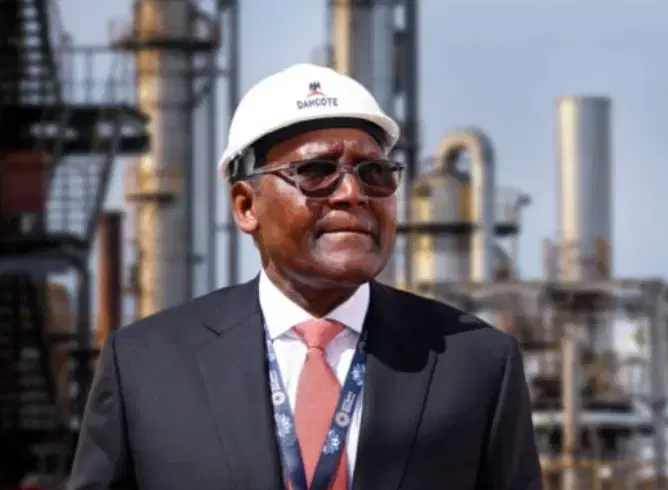
LAGOS — Despite the reduction of Dangote Petroleum Refinery gantry price of petrol by N100 per litre to N1, 075 per litre, due to the drop in crude oil price to $88 per barrel from $110 per barrel in the global market, oil marketers are yet to reduce price at filling stations.
The ongoing war involving the United States, Iran and Israel, led to a shutdown of oil installations and blockade of the Strait of Hormuz, culminating in reduced oil supply to the international market.
Vanguard gathered yesterday that oil price started dropping following President Donald Trump’s declaration that the war would end soon, assuaging fears of extended disruptions to global oil supply.
The checks indicated that Brent crude, the global oil benchmark, dipped by more than 8.45 per cent to $92 a barrel from $110 per barrel, indicating a decrease of 16.4 per cent,
This was also after ministers of European countries met to examine the release of oil reserves as part of measures to tame the price upswings seen recently in the global market.
However, petrol retail outlets in Abuja, the nation’s capital, yesterday reduced their pump price by N100 per litre, following a similar reduction by Dangote Refinery a day earlier.
Checks by Vanguard showed that NNPC Retail outlets, which dispensed at N1,265 per litre, dropped their rate to N1,161 per litre. AA Rano and AYM Sharfa also reduced their prices to N1,230 from N1,330 on Tuesday.
However, most independent marketers retained their old prices, ranging from N1,300 to N1,355 per litre.
Similarly, filling stations visited in Lagos sold the product at between N1,170 and N1,250 per litre, depending on location.
Depot price ranged between N1, 190 and N1,220 per litre
Investigations revealed that in Lagos, depot owners, including Matrix, Menj, NIPCO, Pinnacle and Rainoil, sold the product at N1,200, N1,180, N1,175, and N1,200 per litre respectively.
It also showed that in Warri, depot owners, such as Danmarna, Matrix, Parker, Prudent and Zamson, sold the product for N1,200, N1,205, N1,200, N1,204 and N1,200 per litre, respectively.
In Port Harcourt, Bulk Strategic, Liquid bulk, Masters, Matrix and Sigmund sold it at N1, 200, N1,150, N1,215, N1,220 and N1,215 per litre respectively.
Also, in Calabar, depot owners, such as Dozzy, Fynefield, Matrix, NorthWest and Wabeco, sold petrol for N1,195, N1,200, N1,205, N1,200 and N195 per litre respectively.
Transporters, commuters, others lament high fuel prices
Consequently, many transporters and commuters lamented their ordeals, and called on the Midstream and Downstream Petroleum Regulatory Authority, NMDPRA, to intervene and compel oil marketers to adjust pump price without further delay.
One of them said: “Operators, especially depot owners, are always fast to adjust upward prices in their favour. However, they always find it difficult to adjust downward in favour of consumers.”
A motor bike operator, who gave his name as John Bassey, said: “Life has become very difficult with me and other operators in the transport sector because of the high cost of petrol.
‘’This is because many commuters have fixed income and find it equally difficult to pay exorbitant transport fares.”
Also, a private car owner, Mr. Ola Salami, said: “I had to park my car. I am bringing it out for the first time because I learned that Dangote Refinery has reduced its gantry price but I am disappointed because the price remains high in all the filling stations I have visited so far.”
Reacting to the development yesterday, the Executive Director, Centre for Promotion of Private Enterprises, CPPE, Dr Muda Yusuf, noted that the Dangote Petroleum Refinery had taken the right step, noting that the refinery had been able to meet domestic demand.
He said: “I learned the Dangote Petroleum Refinery has been able to meet our domestic demand, according to the latest report of the NMDPRA. The refinery has done well as this would enable the nation to conserve foreign exchange previously used to import fuel into the nation.
“Government policy should continue to encourage domestic refining through a coordinated mix of trade policy, fiscal policy and monetary policy measures. Priority areas should include ensuring reliable crude supply arrangements, strengthening petroleum distribution infrastructure, introducing tariff protection, encouraging additional refining investments, and promoting export competitiveness for refined petroleum products.”
Price reduction to ease burden on consumers — Dangote Refinery
In a statement on Tuesday, the management of Dangote Petroleum Refinery had said the latest price reduction was to reduce the sufferings of Nigerians.
It stated: “This decision underscores our commitment to maintaining a pricing structure that remains sensitive to global market trends and reflective of our principles of fairness and transparency.
“The refinery noted that as a company operating under strict governance standards and strong ethical values, it is important for us to ensure our pricing aligns with the ongoing decline in global crude oil prices.
“All crude processed at the refinery is purchased at the global benchmark price, plus a premium of $3 to $6. Foreign exchange payments are made at the prevailing market rate, with no subsidies applied to either crude or forex.
‘’Additionally, crude supplied through the Naira for Crude arrangement is priced in line with the global benchmark plus premium and converted to naira using the current exchange rate.
“In 2025 alone, we reduced our gantry prices on no fewer than eight occasions, increasing them only twice—an effort rooted in economic patriotism and our responsibility to the Nigerian people. We remain committed to ensuring that any cost advantages are passed on to consumers across the 36 states and the Federal Capital Territory.
“Recently, the Managing Director of Dangote Petroleum Refinery, David Bird, assured Nigerians that the refinery will continue to meet the nation’s fuel demand despite turbulence in the global oil and gas market. He noted that while fuel import dependent nations are experiencing panic buying and rationing, Nigeria will not face similar conditions because of the refinery’s unwavering commitment to ensuring nationwide fuel availability.
“Bird highlighted that the refinery continues to supply uninterrupted fuel to the domestic market even as geopolitical tensions in the Middle East have triggered sharp increases in crude prices, freight charges, and insurance costs. He described the recent spike in crude markets as unprecedented, pointing out that oil surged from the mid $60 range to nearly $120 per barrel in just one week—disrupting every segment of the global energy supply chain.
‘While acknowledging that the refinery is not insulated from global price fluctuations, freight volatility, or rising insurance premiums, Bird emphasized that Nigeria now enjoys a significant advantage: a secure fuel supply driven by domestic refining capacity.”
Straits of Hormuz closure: IEA approves release of 400m barrels of oil by 32 nations
Meanwhile, the International Energy Agency, IAEA, has approved the release of 400million barrels of oil, the largest ever, to offset the supply lost through the closure of the Strait of Hormuz.
This comes as Tehran said it would not allow even a single litre of oil to pass through the Strait to reach the US, Israel and their partners, and also warned it was ready for a long war of attrition that would “destroy” the world economy, after firing on two commercial ships and threatening any vessels from the US or its allies.
Spokesman for Tehran’s Khatam al-Anbiya Military Command Headquarters, Ebrahim Zolfaqari, threatened that any vessel or tanker bound to the destinations would be a legitimate target.
Meanwhile, Fatih Birol, Executive Director at IEA, said the decision was unanimously reached by its 32 member states to launch the “largest ever release of emergency oil stocks in our agency’s history.”
He said IEA countries voted “unanimously” to launch the “largest ever release of emergency oil stocks in our agency’s history”.
The closure of the strait had sparked a jump in oil price, with the commodity reaching more than $100 per barrel on Monday.
It, however, declined on Tuesday after US President, Donald Trump, announced that the war would soon end, but started upward trend yesterday.
In a statement, Birol said: “The oil market challenges we are facing are unprecedented in scale, therefore I am very glad that IEA Member countries have responded with an emergency collective action of unprecedented size.’’
‘’It is the sixth time the IEA has approved a coordinated release of oil stocks, having previously done so in 1991, 2005, 2011, and twice in 2022’’ .
Meanwhile, Saudi Arabia is ramping up oil flows through its East-West pipeline network as Gulf producers scramble to keep exports moving.
The 750 mile (1200km) pipeline carries crude from fields in the Persian Gulf to export terminals on the Red Sea, allowing shipments to bypass the Strait of Hormuz.
Before the current crisis, the East-West Saudi pipeline was transporting about 2.8 million barrels of oil a day. Saudi oil giant Aramco’s boss confirmed on Tuesday that they are now pushing flows towards its maximum capacity of about 7 million barrels a day as tankers shift loading operations to the kingdom’s Red Sea ports.
Saudi Arabia and the UAE are among the few Gulf producers with pipelines designed to partially bypass the Strait of Hormuz. The UAE’s Abu Dhabi Crude Oil Pipeline can transport about 1.8 million barrels a day to the port of Fujairah on the Gulf of Oman.
But even at full capacity, the pipelines operated by Saudi Arabia and the UAE would move less than half the crude that typically flows through the Strait of Hormuz.
Other Gulf producers without similar alternatives – including Kuwait and Iraq – have already begun cutting production.



Comments
Please login to leave a comment.
No comments yet. Be the first to share your thoughts!