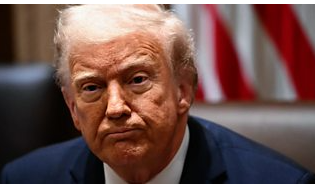
In a display of defiance against US President Donald Trump, Iran launched new missiles early Tuesday, as Trump threatened to destroy the country's oil export hub of Kharg Island, along with power and desalination plants, unless Tehran agrees to a deal to end the war.
Israeli Prime Minister Benjamin Netanyahu, a key partner of Trump in attacking Iran, claimed that more than half of his military objectives had been achieved, but both leaders declined to provide a timeline for the operation, which has sparked a regional war and driven global oil prices upward.
In Dubai, four people were injured by falling debris from intercepted projectiles, and a Kuwaiti oil tanker caught fire in the port, according to local authorities, who have seen the city's reputation for stability shaken by over a month of war.
Saudi authorities reported intercepting eight ballistic missiles, while Iranian Foreign Minister Abbas Araghchi publicly called on Saudi Arabia to "eject US forces," stating that Tehran respects the "brotherly" kingdom.
An Iranian parliamentary committee voted to impose tolls on vessels in the Strait of Hormuz, a crucial passageway for global oil, and to completely ban ships from the United States and Israel, a move that has been met with opposition from US Secretary of State Marco Rubio.
Rubio stated that "no one in the world can accept" the Iranian tolling plan, which he believes sets a dangerous precedent, allowing nations to take control of international waterways and claim them as their own.
US President Trump warned that if a deal is not reached, including the reopening of the Strait of Hormuz, US forces would destroy "all of their Electric Generating Plants, Oil Wells and Kharg Island (and possibly all desalinization plants!)," a move that experts say would be illegal under international humanitarian law and could constitute a war crime.
Meanwhile, in Lebanon, Israel has been pounding the country, including central Beirut, in an effort to deliver a heavy blow to Hezbollah, the Iranian-backed force that had fired rockets in solidarity after Israeli forces killed Iran's supreme leader, Ali Khamenei.
The UN mission in Lebanon reported that two Indonesian peacekeepers were killed when "an explosion of unknown origin destroyed their vehicle," with two other peacekeepers wounded, one seriously, and another Indonesian peacekeeper killed on Sunday.
The Israeli military has launched an investigation to determine if it or Hezbollah was responsible for the deaths of the peacekeepers, while France, a key player in Lebanon, condemned the killings and called for an urgent UN Security Council meeting, scheduled for Tuesday at 14H00 GMT.
Economy ministers and central bankers from the G7 club of rich countries met in Paris to discuss the war's consequences, with many countries introducing energy-saving measures or cutting fuel taxes to help consumers, as market experts warned of potential further oil price hikes.
Yemen's Iranian-backed Houthi rebels fired missiles and drones at Israel over the weekend, posing a threat to shipping on the Red Sea, in addition to the Gulf, and adding pressure to an already volatile situation.
Netanyahu claimed that Israel had achieved key objectives, including "wiping out" industrial plants in Iran and coming "close to finishing their arms industry," but refused to put a schedule on the operation.
US Secretary of State Marco Rubio stated that the war would last "weeks" more, not months, while Egyptian President Abdel Fattah al-Sisi appealed directly to Trump to find an offramp, saying "please, help us to stop the war, you are capable of it."
Trump claimed to be in direct contact with senior Iranian figures, but Iranian foreign ministry spokesman Esmaeil Baqaei denied any negotiations, saying the United States had sent only a request to talk via intermediaries, including Pakistan.
Despite weeks of strikes, residents of Tehran reported that the city was still clinging to some routine, with cafes and restaurants open and no shortages reported in supermarkets or petrol stations, although security remains tight, with checkpoints erected on streets around the capital.
A 27-year-old dental assistant, Fatemeh, described the reality of living through war, saying "when I make it to a cafe table, even for a few minutes, I can almost believe the world hasn’t ended," but added that "then I go back home, back to the reality of living through war, with all its darkness and weight."
Comments
Please login to leave a comment.
No comments yet. Be the first to share your thoughts!