The Federal Government has revealed that state governments are responsible for approximately 48 per cent of total public expenditure in Nigeria, underscoring the need for enhanced coordination across all levels of government to achieve the country's economic development objectives.
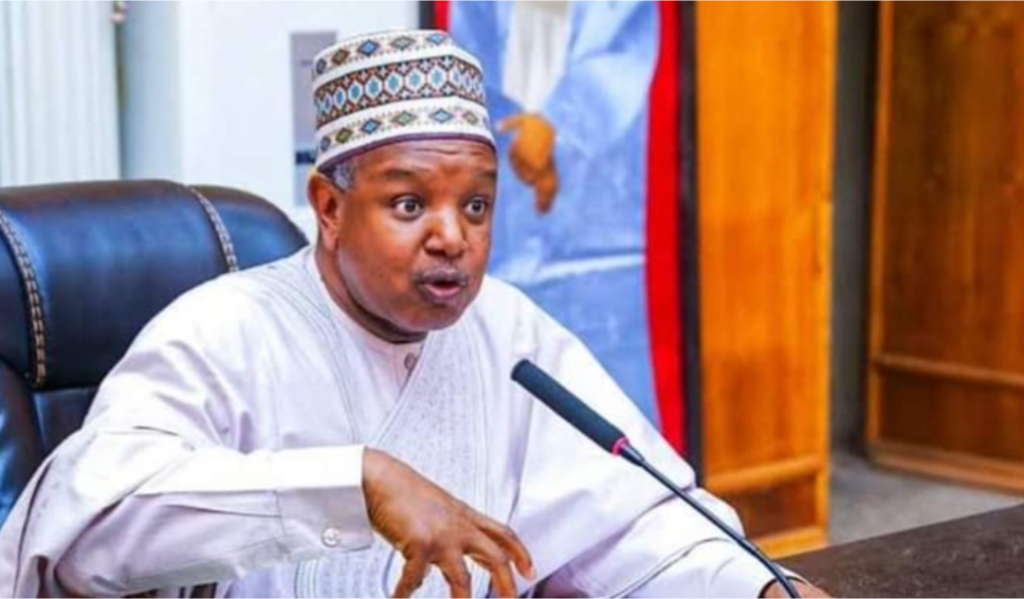
Abubakar Atiku Bagudu, Minister of Budget and Economic Planning, made this disclosure while meeting with Dr Doris Uzoka-Anite, the newly appointed Minister of State for Budget and Economic Planning, who commenced her duties at the ministry yesterday.
According to Julie Osagie-Jacobs, Director of Information and Public Relations in the ministry, Bagudu stressed the importance of effective policy coordination among federal, state, and local governments in driving national development.
A statement from the ministry noted that Bagudu referenced recent discussions of the National Economic Council, which identified key policy priorities aimed at accelerating national development, including improved coordination among federal, state, and local governments, given that state governments account for about 48 per cent of public expenditure.
Bagudu reaffirmed the Federal Government's commitment to achieving its goal of growing Nigeria's economy to $1 trillion by 2030, which will be pursued through sustained economic expansion of about seven per cent annually.
The forthcoming National Development Plan, covering 2026 to 2030, is expected to guide policy reforms, investment priorities, and development initiatives across the country, with the Federal Ministry of Budget and Economic Planning playing a central role in shaping the national development strategy.
As the country's official planning authority, the ministry is responsible for preparing and coordinating national development plans, harmonising fiscal and economic policies, providing policy advice to the President, and coordinating development programmes across federal, state, and local governments.
Bagudu highlighted several priority areas identified by the National Economic Council to accelerate growth and strengthen economic management, including increasing investment in security and ensuring sustained financing for transformative infrastructure projects.
Additionally, the minister noted that intensifying enforcement against illegal activities in the extractive sector, particularly crude oil theft and illegal mining, is a key priority area.
The ministry continues to coordinate international development partnerships to support Nigeria's economic expansion, with a recent milestone being the upgrade of Nigeria's bilateral relations with China to a comprehensive strategic partnership.
This partnership has resulted in several cooperation agreements focused on economic development, according to Bagudu.
Dr Doris Uzoka-Anite, in her response, emphasized that private sector participation will be critical to achieving the country's growth ambitions, with about 95 per cent of Nigeria's economic development expected to be driven by the private sector.
Uzoka-Anite urged that the administration's Renewed Hope programme should be anchored on private sector leadership to deliver sustainable economic outcomes, expressing confidence that President Bola Tinubu can achieve the $1 trillion economy goal.
She appreciated President Tinubu for the opportunity to serve in different capacities within the administration, having previously served as Minister of Industry, Trade and Investment and later as Minister of State for Finance before her new appointment.
Uzoka-Anite's experience serving on several economic committees of the federal government will support her new role in the ministry, she noted.
The Permanent Secretary of the Ministry of Budget and Economic Planning, Dr Deborah Odoh, described Uzoka-Anite's resumption as timely and significant for the ministry's work, adding that her insights and engagement will strengthen the ministry's leadership team.



Comments
Please login to leave a comment.
No comments yet. Be the first to share your thoughts!