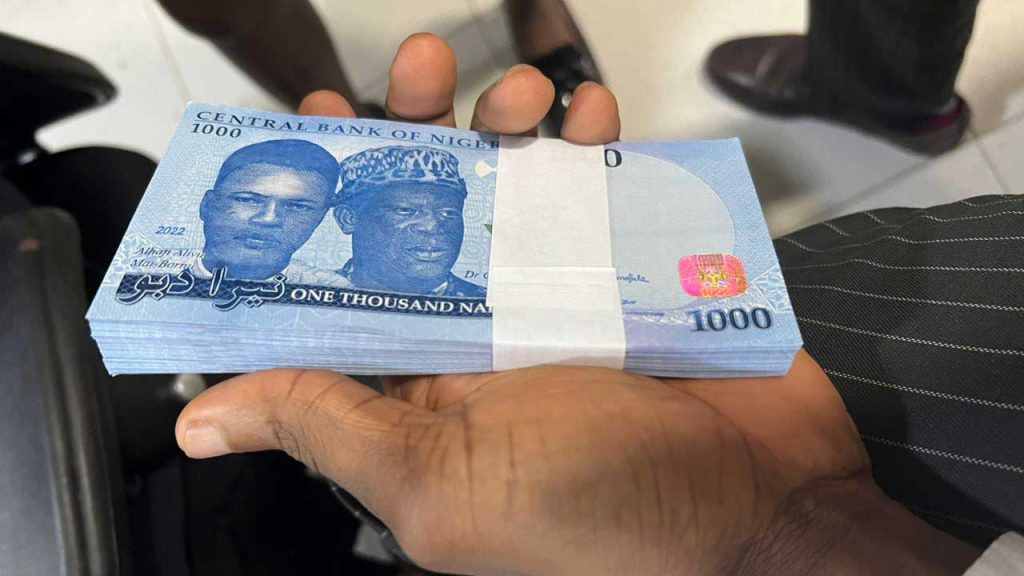
The 1000 naira note, a staple in everyday life, has lost its purchasing power, and its value is now a mere shadow of its former self, leaving individuals questioning its reliability in covering basic expenses.
Today, a thousand naira can barely buy a liter of fuel, struggles to secure a proper meal, and sometimes cannot even cover transportation costs across the city, rendering it almost worthless in the hands of its owner.
This devaluation of the currency has led to a crisis of trust, as the quiet agreement between citizens and the system, which ensures that their hard work translates into tangible rewards, begins to break down, giving rise to a more profound issue than just inflation.
The problem is the erosion of meaning, which manifests in small, often overlooked moments, such as when individuals hesitate before making a purchase or adjust their expectations based on what they can afford rather than what they need.
These subtle adjustments, though not dramatic, are significant because they are happening everywhere, all at once, and are becoming the new normal, as people adapt to the diminishing value of their money.
Nigerians have shown remarkable resilience in the face of adversity, but each adjustment comes at a cost, with a little convenience, dignity, and expectation being lost in the process, until what was once unacceptable becomes routine.
The country is rich in resources, talent, and global cultural influence, yet it is struggling to provide basic necessities to its citizens, who are forced to calculate whether they can afford to eat or move, highlighting the paradox of a nation that is rich on paper but poor in practice.
This disparity is widening, and the truth is that money that cannot meet basic needs is no longer functioning as it should, becoming symbolic and failing to deliver on its promises.
As a result, people are changing their behavior, focusing on short-term survival rather than long-term planning, and spending quickly, as holding money feels pointless, leading to a society that is not only economically struggling but also psychologically shrinking.
Ambition and risk-taking are declining, and the future seems distant and uncertain, making it challenging for the country to grow and develop, as a society that lives in survival mode risks forgetting what progress looks like.
Resilience, though a strength, also has a darker side, as it can normalize what should never be accepted, making people settle for less than they deserve, and when people stop expecting the system to work, it no longer feels pressure to improve.
The questions before us are fundamental, including what the value of work is in a country where earnings cannot secure basic needs, what growth means if it is not felt by ordinary people, and what a currency is worth if it cannot carry the weight of the life behind it.
These questions are no longer theoretical but have become a daily reality, as money is not just what we spend but what we trust to carry our lives, and a currency fails not when it loses value but when it loses meaning.
A thousand naira may still exist, but it no longer feeds, moves, or solves problems with certainty, and when a society reaches this point, it is confronting a quiet breakdown in the relationship between effort and reward.
While survival is possible, it is not the same as progress, and a country that remains in survival mode for too long risks losing sight of what progress looks like, and when the highest note in your pocket cannot sustain you, something fundamental is broken.
The problem is no longer just poverty but a loss of meaning, trust, and the idea that effort should lead to survival, and when a country's money stops meaning anything, what begins to disappear is not just value but belief, and once belief goes, everything else follows.


Comments
Please login to leave a comment.
No comments yet. Be the first to share your thoughts!