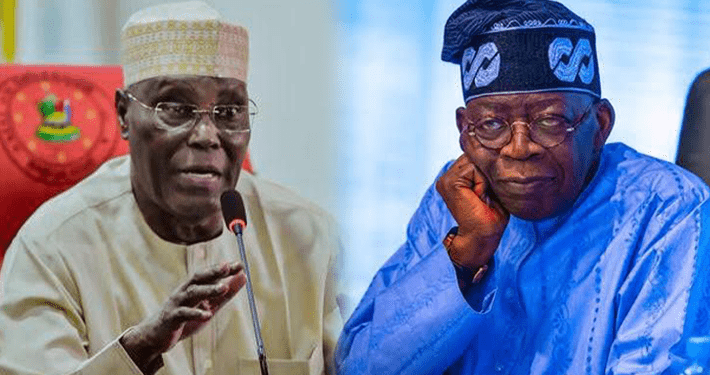
Atiku to Tinubu: Explain ₦166.79trn debt despite rising revenue
Key Takeaways30-sec read
- n Read Also: n After more than three years of higher food, transport, fuel, electricity and other living costs, Atiku said Nigerians were entitled to know why government revenues had risen while borrowing continued.
- n “A government that says more money is coming in must explain why it keeps borrowing and why the people paying for its policies cannot see the promised gains,” Atiku said.
- n He urged Tinubu to provide a full reconciliation of the debt, including old obligations newly captured, exchange-rate effects on foreign debt, fresh loans contracted since 2023, repayments and outstanding balances.
By Luminous Jannamike
nABUJA — Former Vice President Atiku Abubakar has challenged President Bola Tinubu to explain why Nigeria’s public debt has risen to ₦166.79 trillion despite increased government revenues, saying Nigerians are yet to see the promised gains from the administration’s economic reforms.
nRead Also:
nAfter more than three years of higher food, transport, fuel, electricity and other living costs, Atiku said Nigerians were entitled to know why government revenues had risen while borrowing continued.
nIn a statement by Phrank Shaibu, Director of Strategic Communications of the ADC Presidential Campaign Council, Atiku said Nigeria’s public debt rose from ₦49.85 trillion in March 2023 to ₦166.79 trillion by June 2026.
n“A government that says more money is coming in must explain why it keeps borrowing and why the people paying for its policies cannot see the promised gains,” Atiku said.
nHe urged Tinubu to provide a full reconciliation of the debt, including old obligations newly captured, exchange-rate effects on foreign debt, fresh loans contracted since 2023, repayments and outstanding balances.
n“I expect President Tinubu to put the full account before Nigerians,” he said.
nAtiku also questioned the gap between official economic indicators and the rising cost of living, arguing that improved government revenues and other macroeconomic indicators had yet to translate into affordable living conditions for many Nigerians.
n“The true test of economic policy is whether Nigerians can afford food, transportation, housing, education, healthcare and electricity,” he said.
nIMF assessment
nThe criticism comes against the backdrop of a June 2026 IMF assessment which, while acknowledging improved macroeconomic outcomes from Nigeria’s reforms, said conditions remained difficult for many Nigerians.
nThe Fund estimated poverty at 63 per cent and said 27 million Nigerians had faced food insecurity in late 2025.
nAtiku further cited BudgIT figures showing ₦12.52 trillion spent on debt service against ₦18.63 trillion in revenue by the third quarter of 2025, while the 2026 fiscal framework projects a deficit of about ₦31.45 trillion.
n“If President Tinubu understands abroad what debt payments are taking away from Nigeria, then he must explain at home why the borrowing bill continues to grow,” Atiku said.
nHe also demanded explanations for $39.25 million listed as ‘other charges’ in the DMO’s second-quarter 2026 external debt-service schedule, including a $22.5 million charge linked to a First Abu Dhabi Bank Total Return Swap.
n“What exactly was the $22.5 million charge for? Which agreement authorised it? What was the original facility? How much was drawn? What obligations remain outstanding?” he asked.
nAtiku called for a reconciliation of the ₦19.48 trillion Treasury Bills outstanding as at June 30, saying Nigerians needed to know what was redeemed, rolled over and genuinely borrowed.
nHe also demanded an apology from Tinubu and the APC over the hardship caused by the reforms.
n“Nigerians were asked to sacrifice. Fuel subsidy was removed. The naira was allowed to depreciate sharply. Electricity and transportation costs rose. Government revenues increased, yet borrowing continued. After all of this, the Nigerian people are entitled to ask one simple question: what exactly did our sacrifice buy?” Atiku said.
n“The real test of this economy is not whether the numbers look good in government presentations. It is whether ordinary Nigerians can afford to live,” he added.
n nReader Reactions12 votes
What is your take on this story? Tap an emoji to react.
Related Stories
 Business & Economy
Dangote Refinery Raises Alarm Over 22 Sabotage Attempts by Nigerian Workers
By RealNaijaGist News Reporters rnDecember 19, 2025rnrnDangote Refinery has raised serious concerns over what it described as unpatriotic and delibera
 Business & Economy
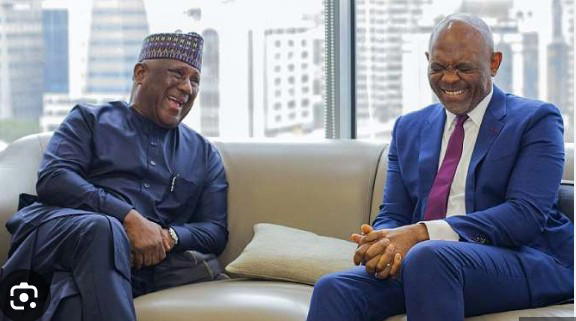
Rabiu, Elumelu strengthen partnership as BUA Foods hits N1.77tn revenue
A meeting between leading Nigerian industrialist, Abdul Samad Rabiu, and banking executive, Tony Elumelu, has signalled renewed collaboration between capital and industry, as BUA Foods posted strong financial results for 2025. Rabiu, founder and chairman of BUA Group, hosted Elumelu and his execu...
 Business & Economy
NNPCL Pledges to Make a Difference in the Lives of Over 200 Million Nigerians
The NNPC Limited has reaffirmed its commitment to improving lives across Nigeria, stating that its success is measured not only by oil production but also by the number of people positively impacted.n